Fertility Diet: What to Eat to Boost Your Chances of Conception


Fertility Diet: What to Eat to Boost Your Chances of Conception
What you eat directly affects your reproductive health — both the quality of eggs and sperm, and your body's hormonal environment. The fertility diet isn't a fad or a myth; it's grounded in an impressive and growing body of scientific evidence linking dietary patterns to conception outcomes.
This guide brings together the strongest evidence on what to eat (and what to avoid) when you're trying to conceive, for both women and men.
The Science Behind the Fertility Diet
The most significant research on diet and fertility comes from the Nurses' Health Study at Harvard, which tracked over 17,000 women for eight years. The resulting "Fertility Diet" recommendations showed that certain dietary patterns were associated with significantly lower rates of ovulatory infertility — one of the most common reasons for difficulty conceiving.
More recently, research on sperm quality has extended the evidence to male fertility, showing that dietary patterns influence sperm count, motility, morphology, and DNA integrity. For couples trying to conceive, optimising both partners' diets offers meaningful potential benefit.
Top Fertility Foods for Women
Ready to Boost Your Fertility?
Explore the full Conceive Plus range, trusted by couples across Europe.
Shop Conceive Plus Now →These foods have the strongest evidence for supporting female fertility and reproductive health:
Dark Leafy Greens
Spinach, kale, rocket, and Swiss chard are rich in folate — essential for healthy egg development and embryo formation. Folate deficiency in early pregnancy is linked to neural tube defects. The NHS, WHO, and European health bodies all recommend 400mcg of folic acid daily before and during early pregnancy. Dietary folate from greens should supplement, not replace, folic acid supplements when TTC.
Whole Grains
Switching from refined carbohydrates (white bread, white rice, processed cereals) to whole grains (quinoa, brown rice, oats, whole wheat) significantly improves insulin sensitivity. High-glycaemic diets that spike blood sugar promote insulin resistance, which disrupts ovulation by affecting LH and FSH signalling. Women with the best insulin sensitivity have higher rates of ovulatory fertility.
Legumes and Plant Protein
The Harvard Fertility Diet found that substituting plant protein for animal protein reduced risk of ovulatory infertility by up to 50%. Lentils, chickpeas, beans, and soy foods are excellent sources. Lentils and beans are also rich in iron — low iron is linked to increased risk of ovulatory infertility in women.
Oily Fish (Salmon, Sardines, Mackerel)
Omega-3 fatty acids — particularly DHA and EPA — are essential for healthy egg development, embryo quality, and uterine receptivity. Studies show women with higher omega-3 intake have better egg quality and higher rates of successful implantation. Aim for 2–3 portions of oily fish per week when trying to conceive (avoiding high-mercury species like swordfish and shark).
Full-Fat Dairy
Surprisingly, the Harvard research found that full-fat dairy (not low-fat) was associated with lower risk of ovulatory infertility. Full-fat yoghurt, milk, and cheese appear to have a beneficial effect on ovulation regularity. This may be due to the fat-soluble vitamins and hormones present in full-fat dairy products.
Nuts and Seeds
Walnuts, almonds, Brazil nuts, sunflower seeds, and pumpkin seeds provide vitamin E, omega-3s, selenium, zinc, and antioxidants — all important for reproductive health. Brazil nuts are one of the richest natural sources of selenium, which supports both egg quality and thyroid function (important for ovulation regularity).
Top Fertility Foods for Men
Male fertility is equally affected by dietary patterns:
Antioxidant-Rich Foods
Oxidative stress is a leading cause of sperm DNA damage. Men with high antioxidant intake — through colourful vegetables, berries, citrus, tomatoes, and green tea — consistently show better sperm quality parameters in research. Lycopene (found in tomatoes, particularly cooked) is specifically associated with improved sperm morphology.
Zinc-Rich Foods
Zinc is essential for testosterone production, sperm maturation, and protection from oxidative damage. Oysters are the richest dietary source; pumpkin seeds, beef, lamb, chickpeas, and cashews are also excellent. Men eating zinc-deficient diets consistently show lower sperm counts and reduced testosterone levels.
Walnuts
A specific study at UCLA found that adding 75g of walnuts daily to the diet for 12 weeks significantly improved sperm vitality, motility, and morphology. Walnuts provide omega-3s, vitamin E, and arginine — all beneficial for sperm function.
Folate-Rich Foods
Men with higher folate intake have lower rates of sperm chromosomal abnormalities (aneuploidy). Green vegetables, legumes, and fortified cereals are good dietary sources — supplementation is also recommended when TTC.
The Mediterranean Diet: The Gold Standard for Fertility
When all the evidence is considered, the Mediterranean dietary pattern emerges as the most consistently fertility-supportive way of eating for both men and women. The Mediterranean diet emphasises:
- Abundant vegetables and fruits of all colours
- Whole grains as the primary carbohydrate source
- Legumes (lentils, chickpeas, beans) several times per week
- Oily fish 2–3 times per week
- Moderate amounts of dairy (preferably full-fat, traditional varieties)
- Olive oil as the primary cooking fat
- Nuts and seeds as snacks
- Limited red meat and processed foods
- Minimal alcohol
Studies following IVF patients have found that adherence to a Mediterranean diet pattern is associated with significantly higher rates of clinical pregnancy and live birth.
Foods to Limit or Avoid When Trying to Conceive
Equally important is knowing what to reduce:
Alcohol
No safe level of alcohol consumption in pregnancy has been established. During TTC, limiting alcohol to occasional, low consumption for women (and moderate consumption for men) is advisable. Heavy drinking in both partners is associated with worse fertility outcomes and miscarriage risk.
High-Mercury Fish
Swordfish, shark, marlin, and king mackerel accumulate mercury, which is harmful to egg and embryo development. Limit tuna to 2 portions per week. Favour lower-mercury fish (salmon, cod, sardines, trout) for omega-3 benefits without the risk.
Trans Fats and Ultra-Processed Foods
Trans fats (from hydrogenated vegetable oils in processed foods) are strongly associated with increased risk of ovulatory infertility in women. Ultra-processed foods are also linked to worse sperm quality in men. The more you can cook from whole ingredients, the better.
Excessive Caffeine
High caffeine intake (more than 300mg/day — roughly 3 cups of coffee) is associated with longer time to conception and increased miscarriage risk. Moderate caffeine (1–2 cups of coffee per day) is generally considered acceptable when TTC.
Fertility Supplements: When Diet Isn't Enough
Even with an excellent diet, some nutrients are difficult to obtain in optimal amounts from food alone. Key supplements for couples trying to conceive include:
For Women:
- Folic acid (400–800mcg/day) — essential from pre-conception
- Vitamin D — widespread deficiency in Northern and Central Europe; affects egg quality and implantation
- Omega-3 (DHA/EPA) — if fish intake is below 2 portions per week
- Coenzyme Q10 — particularly for women over 35, where egg quality is often the primary concern
- Iron — if blood tests show low ferritin
For Men:
- Folate (400mcg/day)
- Zinc (25–30mg/day)
- Coenzyme Q10 (200–600mg/day) — well-evidenced for sperm motility
- Selenium (55–200mcg/day)
- Vitamin C and E (antioxidant support for sperm DNA)
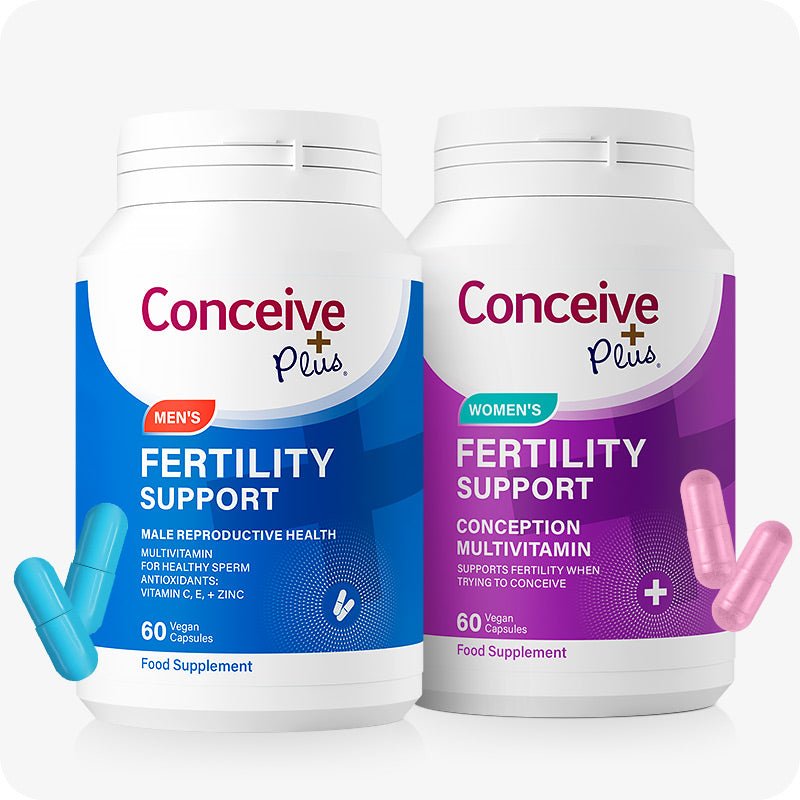
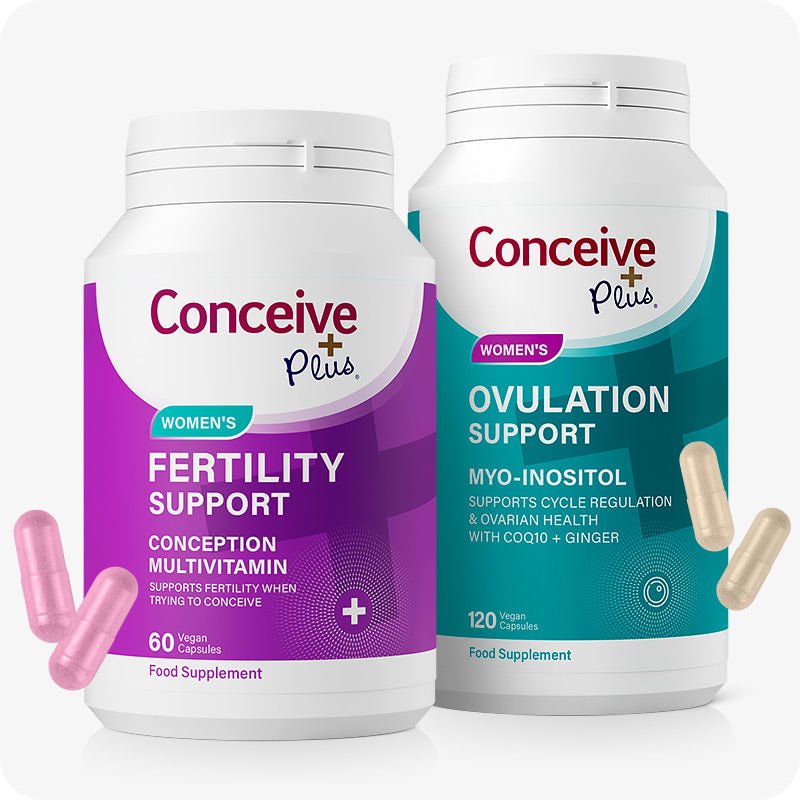
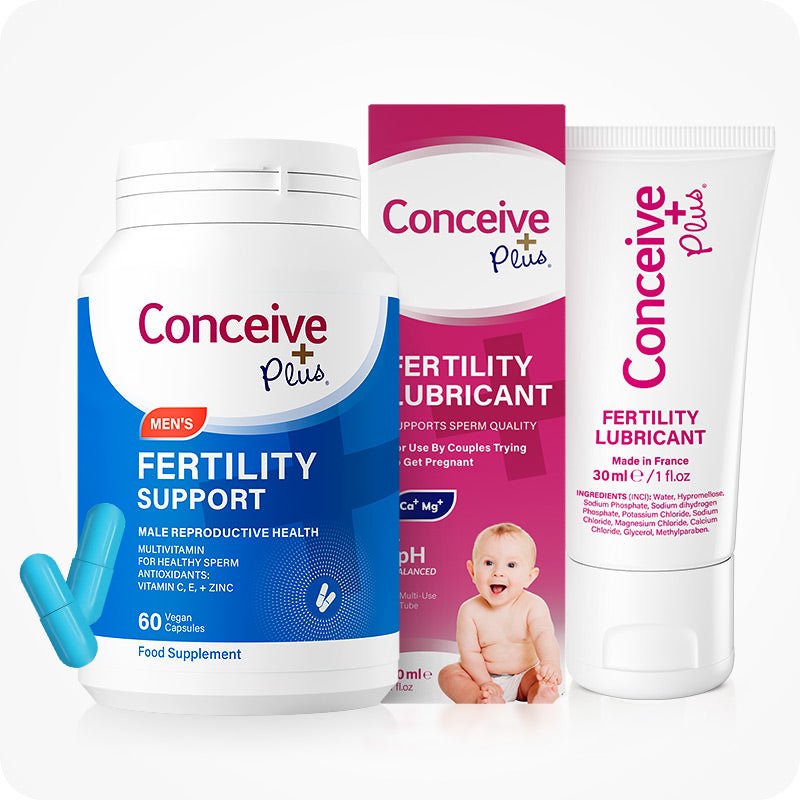
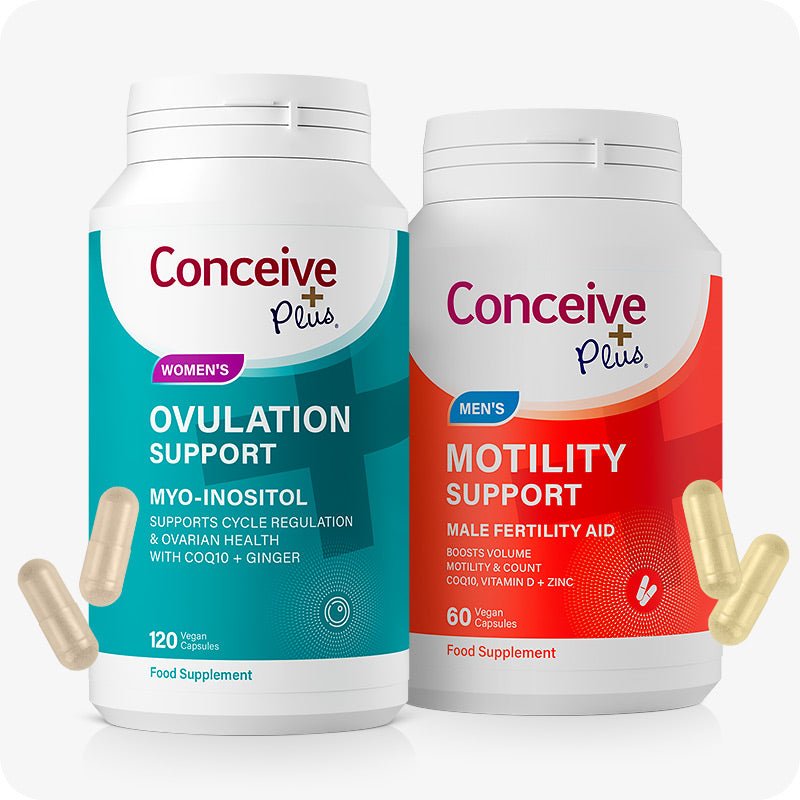
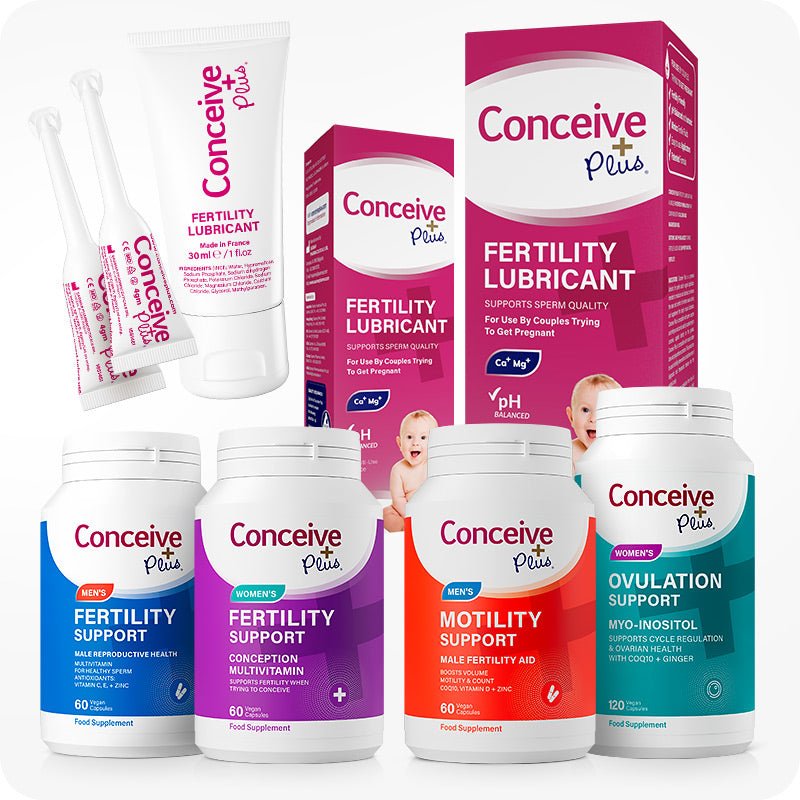
Conceive Plus offers a range of fertility supplements formulated specifically for couples trying to conceive, with clinically relevant dosages of these key nutrients. Available across Europe at conceiveplus.eu/collections/fertility-supplements.
Frequently Asked Questions
How long does it take for a fertility diet to improve egg quality?
Egg development (folliculogenesis) takes approximately 90 days. Dietary improvements made today will begin to show in egg quality roughly 3 months later. Ideally, start dietary optimisation at least 3 months before attempting conception.
Is organic food better for fertility?
Some pesticide residues (particularly endocrine-disrupting pesticides) may affect hormone function and fertility. Research on IVF patients has found associations between high pesticide exposure and lower live birth rates. Prioritising organic for the "Dirty Dozen" (highest-pesticide produce) while not stressing about organic for everything is a balanced approach.
Can vegetarians and vegans follow a fertility diet?
Yes, but with careful planning. Vegans in particular need to supplement vitamin B12, vitamin D, iodine, omega-3 DHA (from algae), iron, and zinc — all of which are less bioavailable or absent in plant-based diets. Working with a dietitian familiar with fertility is recommended for vegan couples TTC.
Does body weight affect fertility?
Yes significantly. Both low and high body weight (BMI below 18.5 or above 30) are associated with ovulation irregularities and reduced fertility. Achieving a healthy weight before TTC — through dietary and lifestyle changes rather than crash dieting — supports hormonal balance and fertility.
Can diet alone fix infertility?
Diet optimises the conditions for fertility but cannot correct all causes of infertility. Structural issues, chromosomal factors, or severe hormonal disorders require medical assessment. Diet is powerful within the context of functional fertility optimisation, particularly for couples in the "unexplained infertility" category.
What's the best breakfast for fertility?
A fertility-supportive breakfast might include: Greek yoghurt with berries and walnuts, or porridge with seeds and fruit, or eggs with spinach and whole-grain toast. The key principles: protein-rich, low glycaemic index, antioxidant-rich, and including healthy fats.
Does coffee affect fertility?
High caffeine intake (over 300mg/day) is associated with longer time to conception. 1–2 cups of coffee per day is generally considered acceptable. During the two-week wait, some women choose to eliminate caffeine entirely as a precaution.
Should both partners change their diet when trying to conceive?
Absolutely. Fertility is a shared journey, and sperm quality is affected by diet just as egg quality is. Couples who both optimise their nutrition give themselves the best combined chance of a healthy conception and pregnancy.
Start Your Fertility Journey Today
Thousands of couples trust Conceive Plus to support their path to parenthood. Join them and experience the difference clinically backed fertility support can make.
Explore Conceive Plus Products →